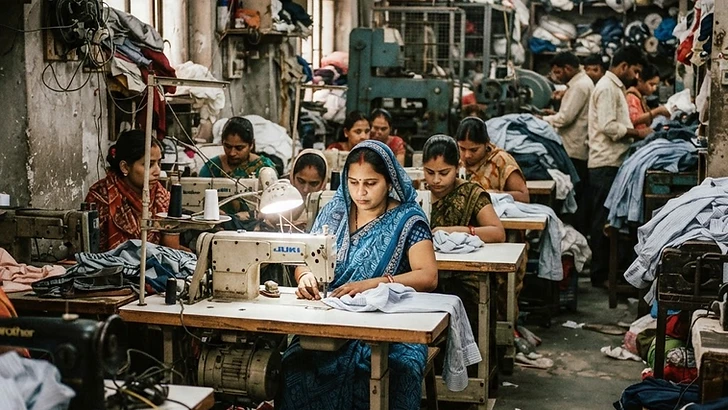
Punjab’s small and medium manufacturers are leaving or expanding outside the state because the cost and risk of operating in Punjab have risen faster than in competing states. The result is a slow but persistent shift of textiles, pharmaceuticals, bicycles, sports goods, engineering and steel capacity toward Haryana, Himachal Pradesh, Madhya Pradesh, Gujarat, Uttar Pradesh and, in some cases, overseas locations
Why industry is leaving
Punjab’s industrial problem is not simply that factories are “closing”; many firms first reduce Punjab operations, then place new investment elsewhere. This is especially damaging because Punjab’s base is overwhelmingly small-scale: small units made up about 99% of the state’s industrial units in 2019–20, limiting their ability to absorb cost shocks or invest in modernisation.
Nobody leaves because they don't love Punjab. They leave because the plant has to run on Tuesday.
The main pressures are:
High power and cross-subsidy costs: Industrial electricity has become relatively expensive partly because agricultural power subsidies are cross-subsidised, reducing the competitiveness of energy-intensive units such as steel, textiles and engineering. Landlocked location and freight costs: Punjab is distant from major ports. With the Pakistan transit route effectively unavailable, exports must move through longer western routes, increasing logistics costs for Ludhiana, Jalandhar and Amritsar exporters. Better incentives elsewhere: Himachal Pradesh’s Baddi–Barotiwala–Nalagarh belt, Madhya Pradesh, Gujarat, Haryana and Uttar Pradesh have offered cheaper land, tax incentives, subsidised capital, lower power costs and easier access to markets or ports. Cheap imports: Chinese bicycles, components, sports goods and other products have undercut local manufacturers, pushing firms either to import inputs or relocate production. Compliance and infrastructure burden: Environmental compliance, effluent-treatment requirements, land acquisition difficulties, poor industrial infrastructure and slow clearances raise costs for MSMEs that lack financial buffers. Weak policy continuity: Industry bodies argue that Punjab has lacked a stable, long-term industrial strategy comparable to competing states, making investors cautious about expansion within Punjab
Where Punjab’s industry is moving
Sector Main destination states Why Pharmaceuticals Himachal Pradesh, Haryana, Madhya Pradesh Tax incentives, industrial clusters, lower operating costs. Cotton yarn, garments, woollens Madhya Pradesh, Gujarat, Maharashtra Proximity to cotton, cheaper land and labour, port access, investment incentives. Bicycle and auto components Tamil Nadu, other Indian states, and import-dependent models Cheaper Chinese components and more competitive manufacturing locations. Sports goods Meerut, Uttar Pradesh Lower costs and a competing manufacturing cluster. Steel and rolling mills Chhattisgarh/Raipur belt, Madhya Pradesh, Gujarat Closer access to coal and raw materials; lower production costs. General MSMEs and engineering Haryana, Himachal Pradesh, Uttar Pradesh, Rajasthan Better incentives, cheaper land/power, and proximity to larger markets.
Companies and examples
Public reporting rarely provides a clean official register of “companies that recently left Punjab,” because many shifts occur through closure, sale of assets, new plants outside Punjab, or gradual relocation of capacity. Still, several named examples illustrate the pattern. Nahar Industrial Enterprises: The company has reportedly shifted a major share of yarn and denim production to Madhya Pradesh; reports said around 40% of its yarn and denim was being made there. Vardhman: Its expansion has been reported as largely outside Punjab, reflecting the wider textile shift toward cotton-growing and incentive-rich states. Trident: Around half of its production capacity was reported to be in Madhya Pradesh, showing how Punjab’s historic textile strength has been partly rebuilt outside the state. JCT Limited: In 2024, JCT moved to sell major assets of its Hoshiarpur filament-yarn plant and its Kapurthala cotton manufacturing plant after suspending manufacturing from September 2023. This is a clear recent example of a Punjab textile unit winding down rather than expanding locally. Sports-goods manufacturers in Jalandhar: Industry reporting records a shift of parts of the sports-goods sector toward Meerut, Uttar Pradesh, as Punjab producers lost ground to cheaper competition and better-located clusters. Pharmaceutical firms: A large number of pharma units have relocated from Punjab to Himachal Pradesh over the past 15 years; Himachal’s Baddi belt became a major pharmaceutical hub because of tax holidays and lower operating costs.
A useful recent signal is that industry representatives claimed in 2025 that 57 industrial units were considering shifting to Uttar Pradesh, citing Punjab’s high taxes, expensive land and unclear industrial policy. This is an intention-to-relocate figure rather than a verified list of completed exits, so it should be treated as evidence of investor sentiment rather than a final count.
Why small units suffer most
Large firms can relocate capacity gradually; small manufacturers often cannot. Many Ludhiana-area units have limited capital, older machinery, thin margins and dependence on local workers and buyers. When freight, power, raw-material and compliance costs rise, they may cut production, delay modernisation, or close rather than move.
This creates a vicious cycle: fewer viable local suppliers weaken industrial clusters; weaker clusters reduce demand for toolmakers, transporters, dyeing units and component suppliers; and the remaining firms face even higher unit costs.
What Punjab needs
Punjab does not need slogans alone; it needs a credible cost-and-certainty package for MSMEs: Predictable industrial power tariffs and a clear plan to reduce the industrial cross-subsidy burden. Fast, transparent land allotment, building approvals and pollution-consent processes. Common effluent treatment, testing, logistics and warehousing facilities for MSME clusters. Export-oriented freight support and stronger rail-road connectivity to western ports. Sector-specific policies for Ludhiana knitwear and bicycles, Jalandhar sports goods and hand tools, and Amritsar agro-processing. A single-window system with legally binding timelines, so investors can plan without political or bureaucratic uncertainty.
Punjab’s industrial decline is therefore not an accident of geography alone. It is the cumulative effect of high operating costs, weak logistics, stronger competing states, import pressure and inconsistent policy support. Unless the state makes Punjab commercially competitive for small manufacturers, the quiet transfer of capacity to Haryana, Himachal Pradesh, Madhya Pradesh, Gujarat and Uttar Pradesh will continue.