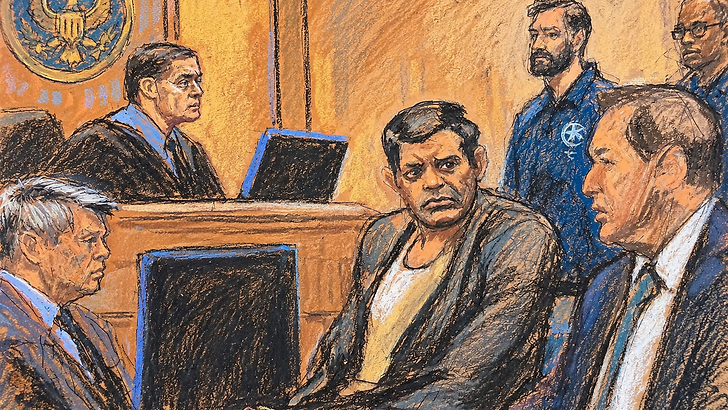
An Indian national, Nikhil Gupta, has been sentenced to 235 months just over 19 years and six months in a US federal prison for his role in a foiled plot to hire a hitman to kill Sikh activist and lawyer Gurpatwant Singh Pannun in New York. The case has renewed concern among Sikh communities in the United States, Canada, Europe and Australia about alleged transnational repression and foreign interference.
What happened in court
US District Judge Victor Marrero handed down the sentence in Manhattan federal court on Friday after a hearing lasting nearly 80 minutes. Gupta, 55, also known as “Nick,” will face deportation and removal proceedings once he completes his prison term.
In February 2026, Gupta pleaded guilty to murder-for-hire, conspiracy to commit murder-for-hire, and conspiracy to commit money laundering. Prosecutors said he had worked with others to arrange the assassination of Pannun, a US citizen and political activist, on American soil.
Court documents cited by prosecutors allege that Gupta and co-defendant Vikash Yadav arranged for $15,000 in cash to be delivered to a person Gupta believed could kill Pannun. The purported hitman was in fact an undercover US law-enforcement officer, and the plot did not succeed.
At sentencing, Gupta apologised, sayinghe was sorry to Pannun, to the communities he had hurt, and to his own family.
Gupta and Indian agencies
US prosecutors alleged that the plot was directed by an employee of the Government of India and that Gupta was recruited in 2023 by Vikash Yadav, described in US court filings as an Indian government employee and former intelligence official. The US Justice Department said Gupta participated in a scheme “directed by a Government of India employee” to assassinate Pannun.
The allegations have placed India’s security and intelligence establishment at the centre of a major international legal and diplomatic controversy. India has previously denied involvement in the alleged plot, but the case has continued to strain relations between Washington and New Delhi.
Vikash Yadav’s role
Yadav remains a co-defendant in the US case but is not in American custody and is reported to be in India. US prosecutors allege that he recruited Gupta and helped direct the plan against Pannun.
Unlike Gupta, Yadav has not been sentenced in the United States, and the case against him remains separate. The distinction matters legally: Gupta’s guilty plea and conviction establish his own criminal responsibility, while allegations concerning Yadav and Indian government involvement remain part of the ongoing US prosecution and diplomatic dispute.
What it means for Sikhs abroad
For many Sikhs in the diaspora, the sentence is being seen as confirmation of long-standing fears that activists, separatist advocates and community figures abroad may be targeted because of their political views. Pannun is a prominent advocate for a sovereign Sikh state, a cause India’s government strongly opposes.
Sikh organisations in the United States, Canada, Europe and Australia have repeatedly raised concerns about surveillance, intimidation, doxxing and violence directed at diaspora Sikhs. The US case is likely to intensify calls for governments to investigate alleged foreign interference more vigorously and to protect citizens and residents from transnational repression.
In Canada, the issue carries particular weight because of the separate 2023 killing of Sikh leader Hardeep Singh Nijjar in British Columbia, which Canadian authorities have linked to agents of the Indian government an allegation India has denied. The Gupta case adds to what US and Canadian authorities have described as a broader pattern of efforts to target Indian dissidents abroad.
A warning for democracies
The sentencing underscores that alleged state-directed assassination plots are no longer viewed solely as a bilateral India-US dispute. They raise questions about the safety of political dissent, religious minorities and advocacy groups across democratic countries with large Sikh populations.
For Sikh communities in Australia and elsewhere, the case is likely to strengthen demands for clearer protections against foreign interference, better police engagement with targeted communities, and independent investigations into threats against diaspora activists. The central issue, community advocates say, is whether people can openly advocate for Sikh self-determination or criticise Indian government policy without fearing retaliation abroad.